Why Web Design Matters for Small Businesses in Indianapolis
Think of your website as your storefront on Monument Circle — the first impression people get before they even step inside. If your digital storefront looks outdated, slow, or confusing, potential customers will walk away. With so many local choices in Indianapolis, from cozy fountain-side cafes in Fountain Square to boutique services in Broad Ripple, a well-designed website gives your small business a real edge.
Understanding Your Indianapolis Audience
Local market research: get to know your neighbors
Who are your customers? Are they commuters heading into downtown, families in nearby suburbs, or college students? Understanding your audience in Indianapolis — whether they live near the Northside or hang out in Mass Ave — helps you craft messaging, visuals, and navigation that speak directly to them. Use Google Analytics, social media insights, and simple in-person conversations to gather real intelligence.
Personas and user journeys
Create a few buyer personas: “Busy Bella” who needs fast answers, “Planner Paul” who reads reviews and compares services, and “Explorer Emma” who wants to browse portfolios and photos. Map their journey from search to conversion and design your pages to remove friction at each step.
Mobile-First Design: Indianapolis Users on the Go
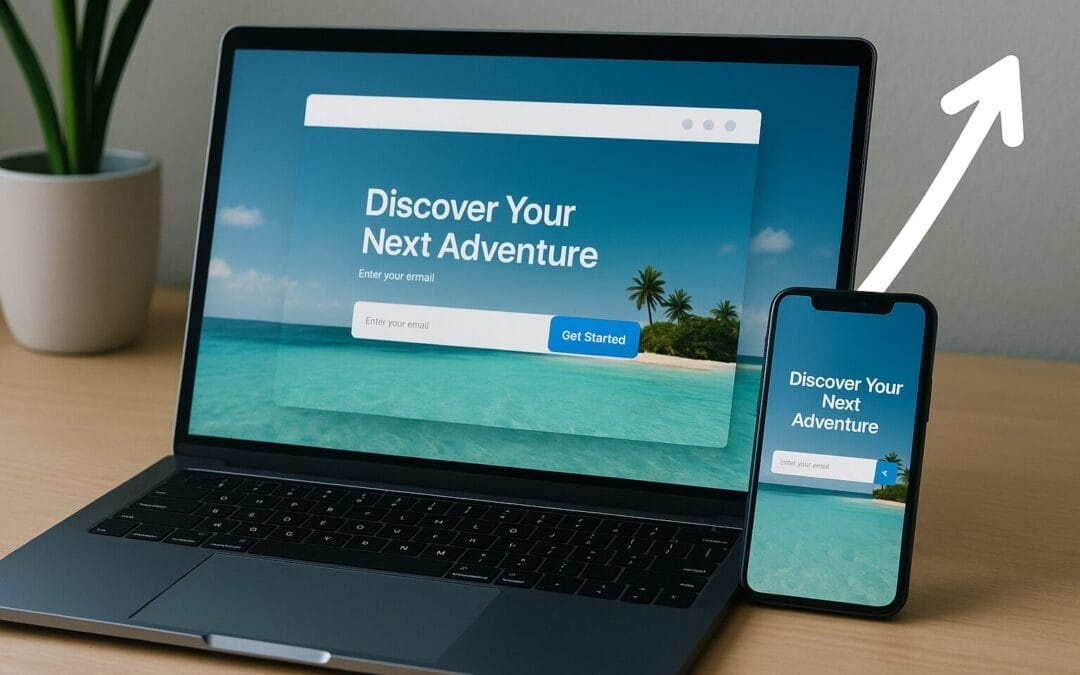
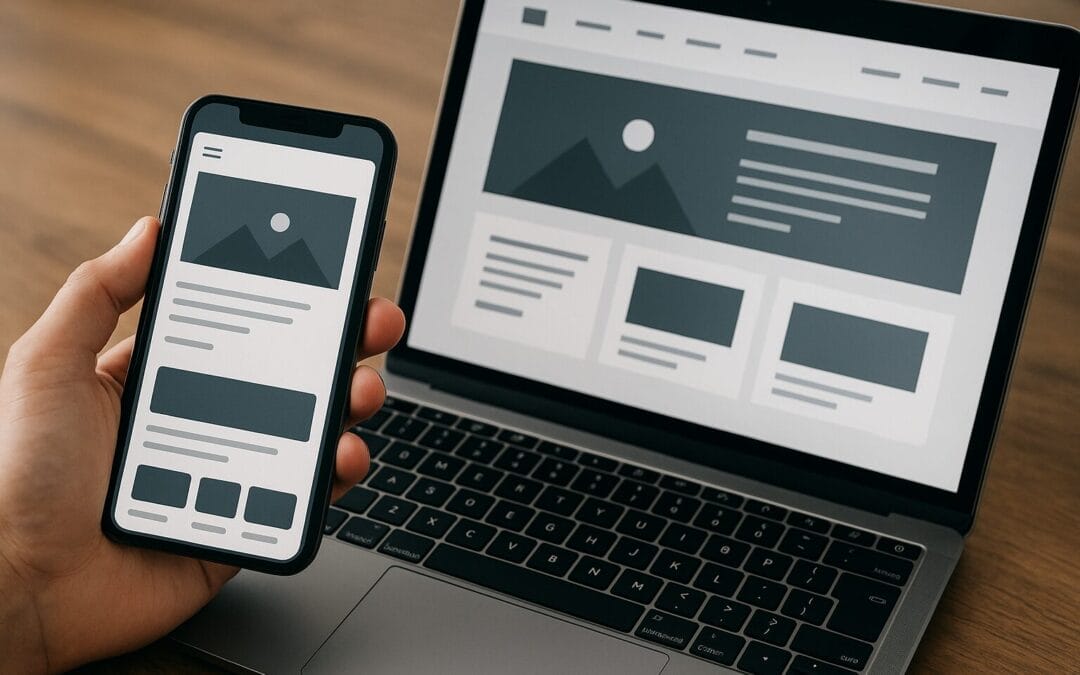
More than half of web traffic now comes from mobile devices. In a city where people look up events, restaurants, or services while out and about, a mobile-first approach isn’t optional — it’s essential. Imagine someone searching for a nearby mechanic between meetings; if your site renders poorly on their phone, you’ve lost that customer.
- Simplify navigation: Big buttons, readable text, and clear call-to-action (CTA) buttons.
- Prioritize content: Put contact info, hours, and services front and center for mobile users.
- Test on real devices: Emulators are helpful, but testing on iPhones, Androids, and various screen sizes reveals real issues.
Speed & Hosting: Keep Your Site Snappy in Indy
Site speed is like the rhythm of a good jazz band — when it’s smooth, people enjoy the experience; when it’s laggy, they get restless. Page load speed influences both user satisfaction and search rankings.
Choose the right host
Invest in reliable hosting with good uptime and responsive support. For Indianapolis businesses, a local or well-reviewed managed host can reduce headaches. Consider hosts that offer server-side caching and easy scalability.
Use a CDN and optimize images
- CDN: A Content Delivery Network (CDN) distributes your content globally and reduces latency — useful even for local businesses because it speeds up assets like images and scripts.
- Image optimization: Use modern formats (WebP), compress images without losing quality, and serve appropriately sized images using responsive srcset attributes.
- Minify & defer: Minify CSS/JS and defer noncritical scripts to speed up rendering.
Clear Branding & Local Identity
Your branding should feel like the visual handshake your business offers. For an Indianapolis business, local identity can be subtle but powerful — a skyline image, neighborhood references, or even colors that match your storefront.
Logo, colors, typography
Keep your logo scalable (SVG is great) and choose a color palette that reflects your brand personality. Pick web-safe fonts and limit yourself to two or three typefaces to maintain consistency.
Show local cues
Feature local landmarks (tastefully), highlight community involvement, and use neighborhood names in content when appropriate — but don’t overdo it. A well-placed neighborhood reference can build trust and relevance for local search.
Navigation & Information Architecture
Simple is better. A messy menu is like a store with jumbled aisles — customers get frustrated and leave. The goal is intuitive information flow so customers find what they want in three clicks or fewer.
Menu best practices
- Keep primary menu items under seven.
- Use clear labels like Services, About, Pricing, and Contact.
- If you have many services, use a well-organized mega menu or sub-navigation.
Footer essentials
Your footer should include NAP (Name, Address, Phone), business hours, a mini-sitemap, social links, and a quick contact form or newsletter signup. Think of the footer as the safety net that catches users who scroll all the way down.
Conversion-Focused Pages
A beautiful website is wonderful, but it must convert. Focus on pages that matter most: the homepage, service pages, and contact/location pages. Make it easy for users to take the next step.
Homepage
Your homepage should clearly communicate who you are, what you do, and why someone should choose you — all within a few seconds. Use a strong headline, supporting subheadline, clear CTAs (Book Now, Get a Quote), and a visual that reinforces trust.
Service pages
Each core service should have its own page. Dive into benefits, typical outcomes, pricing tiers (if applicable), FAQs, and a prominent CTA. Localize these pages with phrases like “serving Indianapolis neighborhoods” or “proudly serving the northside” when relevant.
Contact & location pages
Make it effortless to contact you. Include:
- Clickable phone number
- Embedded Google Map
- Hours and appointment options
- Clear form with minimal fields
SEO Basics for Indianapolis Websites
SEO is not magic — it’s a consistent strategy. Combine technical, on-page, and local SEO to get found by customers searching for services in Indianapolis.
On-page SEO: titles, meta descriptions
- Title tags: Keep them unique and under 60 characters. Include target keyword + local modifier (e.g., “Indianapolis HVAC Repair” — but avoid stuffing).
- Meta descriptions: Compelling snippets under 155 characters that encourage clicks.
- Headers: Use H1 for page title and H2/H3 for logical content structure.
Local SEO: Google Business Profile, NAP, citations
Claim and optimize your Google Business Profile (formerly Google My Business). Keep Name, Address, and Phone (NAP) consistent across directories and citations. Encourage happy customers to leave reviews and respond to them professionally.
Schema markup and localBusiness schema
Implement structured data (JSON-LD) for LocalBusiness, Reviews, Events, and Products. Schema helps search engines understand your content and can enable rich snippets in SERPs, which boosts click-through rates.
Content Strategy: Blog, FAQs, and Resources
Good content builds trust and drives organic traffic. Think of your blog as the place where you answer local questions and prove you know your craft.
Topic ideas for Indianapolis businesses
- “Best times to visit the Indianapolis Farmers Market” — for retail or food businesses.
- “How to prepare for winter HVAC maintenance in Indianapolis.”
- “What to look for when choosing a web designer in Indianapolis.”
- Local event tie-ins and seasonal guides.
Blogging & content schedule
Consistency beats volume. Publish helpful, locally-relevant posts on a predictable schedule (weekly or biweekly). Repurpose blog content into social posts, email newsletters, and downloadable guides.
Visuals & Multimedia
High-quality images and video are trust builders. But authenticity trumps stock overuse — customers want real pictures of your team and space.
Photos and video: authenticity wins
- Use professional photos for key pages (team, storefront, portfolio).
- Short videos of your process or testimonials can dramatically increase conversions.
- Consider 360° or virtual tours if you have an interesting physical space.
Optimize media for SEO
Use descriptive file names, alt text for images, and transcriptions for videos. This aids accessibility and gives search engines more context.
Accessibility & Legal Compliance (ADA)
Accessibility is the right thing to do and increasingly a legal necessity. Make your site usable for people with disabilities by following WCAG basics:
- Provide alt text for images
- Ensure sufficient color contrast
- Make forms keyboard accessible
- Use semantic HTML and proper heading order
Consider adding an accessibility statement and testing with tools like WAVE or Lighthouse.
Trust Signals & Social Proof
Trust is currency. In a city filled with options, how do you prove you’re the real deal? Show evidence.
Reviews, testimonials, case studies
- Feature recent reviews from Google or Yelp.
- Use short, specific testimonials with names and photos when possible.
- Create case studies that show problem → solution → results.
Certifications & badges
Display relevant industry certifications, local chamber of commerce membership, awards, and payment security badges. These small cues reassure visitors during the decision-making process.
Technical Essentials: SSL, Backups, CMS Choices
Technical foundations keep your site safe and stable. Think of them as the plumbing and wiring behind the scenes — you don’t see them, but you’d notice if they failed.
SSL and security
Always use HTTPS — modern browsers flag unsecured sites and it impacts SEO. Set up regular backups, use strong passwords, and implement security plugins or services to detect and block threats.
Backups and maintenance
Automated daily backups (with offsite storage) can save you in a crisis. Test restore procedures occasionally to ensure backups work when needed.
CMS choices: WordPress, Squarespace, Shopify
- WordPress: Highly flexible for content-heavy sites and SEO. Requires maintenance but scales well.
- Squarespace/Wix: Great for simple portfolios and tight budgets; less flexible for custom SEO or complex features.
- Shopify: Best for eCommerce businesses selling products online.
Pick the CMS that aligns with your business goals, technical comfort, and growth plans.
eCommerce Considerations for Indianapolis Small Businesses
Thinking of selling online? You’re joining the modern marketplace — but there are important design and UX decisions to make.
- Product pages: Use clear descriptions, multiple photos, and social proof.
- Checkout flow: Keep it short, add guest checkout, and display security assurances.
- Local pickup: Offer curbside or in-store pickup options — many local customers appreciate same-day pickup.
Analytics & Testing: Measure and Improve
You can’t improve what you don’t measure. Analytics turn gut feelings into data-driven decisions.
Install analytics & set goals
- Use Google Analytics (GA4) and Google Search Console.
- Set conversion goals: contact form submissions, phone click-to-call, bookings.
- Monitor user flow and drop-off points to prioritize fixes.
A/B testing & heatmaps
Use A/B testing for headline variants, CTA text, or layouts. Heatmaps and session recordings (Hotjar, Crazy Egg) reveal how users interact with pages and where they get stuck.
DIY vs Hiring a Professional Indianapolis Web Designer
Can you build your site yourself? Sure. Should you? It depends.
Cost considerations
DIY tools lower upfront costs but often limit customization and SEO potential. Hiring a professional costs more initially but can save time, deliver higher conversions, and provide ongoing support — think of it as investing in a business partner rather than a one-time tool.
How to evaluate agencies or freelancers
- Review portfolios and local case studies.
- Ask for references and measurable results.
- Clarify deliverables: timeline, number of revisions, post-launch support, and training.
- Look for local experience: designers familiar with Indianapolis can add value through local SEO and audience knowledge.
Maintenance & Ongoing Updates
A website is like a garden — it needs regular care. Without updates, content becomes stale, plugins grow outdated, and security gaps appear.
Security updates
- Apply core and plugin updates regularly.
- Use staging sites for major changes before pushing live.
- Monitor uptime and set alerts for downtime.
Content refresh schedules
Update service pages annually, refresh photos seasonally, and add new blog posts regularly to keep content fresh and relevant. Older posts can be updated to maintain SEO value.
Local Marketing Integration: Bridging Offline to Online
Your website shouldn’t exist in a vacuum. Integrate it with your local marketing — events, flyers, community partnerships, and local PR.
Events and local partnerships
List upcoming events on your site, partner with local businesses for cross-promotions, and participate in community initiatives to generate backlinks and local goodwill.
Social media and email
- Use social posts to drive traffic to new content and promotions.
- Build an email list to announce specials, events, and blog updates.
- Localize outreach by segmenting lists by neighborhood or customer type.
Common Web Design Mistakes to Avoid
Avoid these pitfalls that trip up many small businesses:
- Poor mobile usability — make mobile-first decisions.
- Unclear CTAs — visitors shouldn’t guess what to do next.
- Overuse of stock photos — authenticity performs better.
- Slow pages and large unoptimized images.
- Broken links and outdated contact info.
Pre-Launch Checklist: What to Review Before Going Live
Before you hit publish, run through this checklist like a pilot before takeoff:
- Proofread all copy and double-check key facts (address, hours, pricing).
- Test site on multiple devices and browsers.
- Check page speed and optimize bottlenecks.
- Verify Google Analytics, Search Console, and Google Business Profile are connected.
- Confirm SSL certificate, backups, and security measures are in place.
- Ensure on-page SEO elements (title tags, meta descriptions, image alt text) are set.
Real-World Examples: Small Wins for Indianapolis Businesses
Here are practical, low-cost wins that Indianapolis small businesses have used to see real results:
- Local testimonials section: Adding neighborhood-based testimonials (e.g., “Perfect service for Broad Ripple families”) can boost trust and conversions.
- Click-to-call buttons: For service-based businesses like plumbers or HVAC technicians, adding prominent click-to-call buttons on mobile led to immediate upticks in calls.
- Booking widget integration: Dentists and salons that offer simple online booking see lower no-shows and higher client satisfaction.
- Seasonal landing pages: Creating pages for Indy events (e.g., Mini-Marathon specials) captures search traffic and event-driven purchases.
Wrapping Up: How to Prioritize Improvements
When you’re juggling a small business, it’s easy to get overwhelmed. Start with high-impact, low-effort changes:
- Fix glaring mobile usability issues.
- Optimize page speed and images.
- Make contact information and CTAs obvious.
- Claim and optimize your Google Business Profile.
Once those are in place, tackle content strategy and technical SEO. Incremental improvements add up — think of it like building a neighborhood: one block at a time.
Summary
Designing a website that truly serves your Indianapolis small business means balancing form and function. Focus on mobile-first usability, fast hosting, clear branding, and local SEO to attract and convert nearby customers. Use authentic visuals, prioritize conversions with targeted pages, and keep security and accessibility top of mind. Whether you DIY or hire a local pro, consistent measurement and ongoing maintenance will keep your site working hard for you — turning web visitors into loyal customers across Indianapolis neighborhoods.
Frequently Asked Questions
1. How much should a small business in Indianapolis budget for a professional website?
Costs vary depending on complexity. A basic small-business website (3–5 pages) can cost from a few hundred to several thousand dollars. Custom designs, advanced features (bookings, eCommerce), and SEO services increase the price. Think long-term value: investing in conversion-focused design often pays for itself through increased leads.
2. How long does it take to build a local business website?
A simple website can launch in 2–4 weeks, while more complex sites with custom development, eCommerce, or multiple integrations may take 6–12 weeks. Timelines depend on how quickly content, photos, and feedback are provided.
3. Do I need to hire an Indianapolis web designer, or can I use a template?
Templates are cost-effective and work well for many businesses. Hiring a local designer helps if you need custom features, local SEO optimization, or a brand-specific look. Consider hybrid approaches: start with a template and hire a pro to customize and optimize it.
4. What’s the single biggest website improvement for local SEO in Indianapolis?
Claiming and optimizing your Google Business Profile (GBP) is the most impactful local SEO move. Ensure NAP consistency, add photos, collect reviews, and use posts and services within GBP to improve visibility in local search and maps.
5. How can small businesses measure whether their new website is actually working?
Set clear goals (e.g., contact form submissions, phone calls, bookings) and track them with Google Analytics and conversion tracking. Monitor traffic sources, user behavior, and conversion rates. Regularly review these metrics and use A/B testing to refine pages for better performance.