Introduction: Why Web Design Matters for Small Businesses in Indianapolis
If you run a small business in Indianapolis, you probably wear a lot of hats. Marketing director, customer service rep, inventory manager — the list goes on. But there’s one hat you can’t ignore: web designer (even if you outsource it). Why? Because your website is often the first handshake a potential customer has with your business. A weak or slow site is like a messy storefront on Massachusetts Avenue — people walk past and never come in.
In this guide I’ll walk you through practical, actionable web design tips tailored to small businesses serving Indianapolis neighborhoods like Broad Ripple, Carmel, and Fountain Square. Whether you’re setting up a new site, refreshing an old one, or deciding between DIY and hiring a pro, these tips will help you attract local customers, build trust, and convert visitors into paying clients.
Start with Clear Goals: What Do You Want the Website to Do?
Before you pick colors, fonts, or a template, ask yourself: what are the top 1–3 things my website must accomplish? Are you trying to generate leads, take online bookings, sell products, or build awareness? Your answers will shape everything from layout to calls-to-action.
Common Small Business Website Goals
-
Generate phone calls or contact form submissions
-
Book appointments or consultations
-
Sell products or services online
-
Showcase portfolio and social proof
Know Your Indianapolis Audience
Design decisions should reflect the people you serve. An Indy restaurant in Fountain Square will appeal to a different crowd than a law firm in downtown Indianapolis or a boutique in Carmel. Tailor your design, messaging, and imagery to your local customer base.
How to Research Local Audience Preferences
-
Look at competitors and local businesses — what colors, language, and imagery do they use?
-
Ask current customers for feedback — what do they like or dislike about your site?
-
Use Google Analytics and Search Console to see who visits and what they do on your site
Mobile-First Design: Indianapolis Users Are on the Go
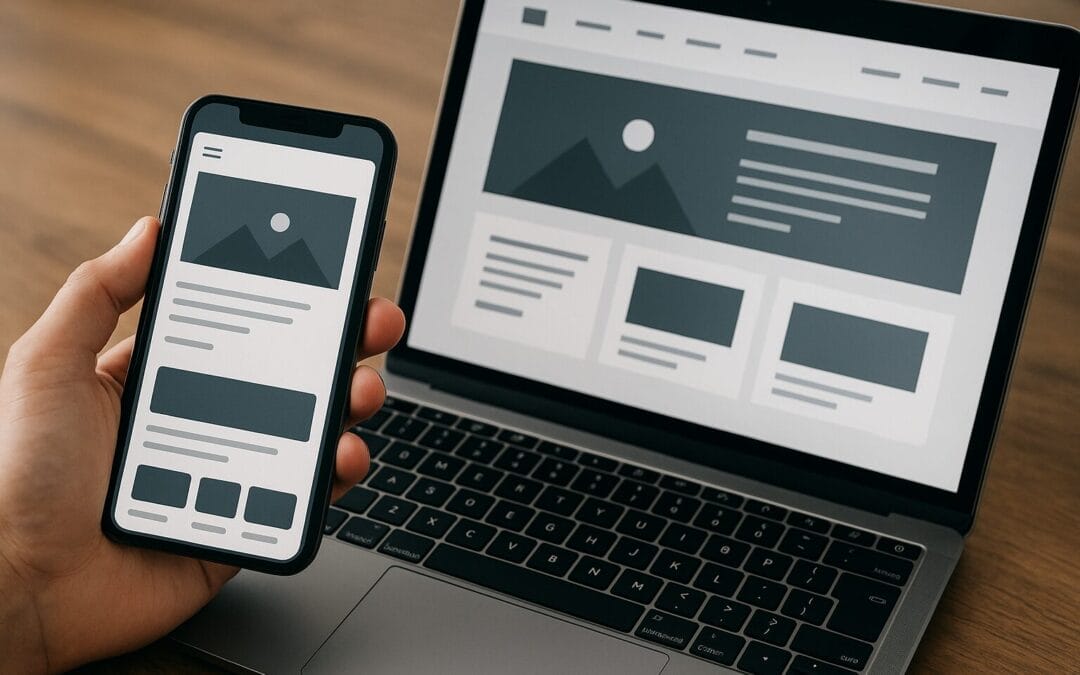
Most locals will find you on their phones — checking directions before heading to a Broad Ripple cafe, or booking a contractor from their tablet. A mobile-first approach ensures you deliver the best experience where it matters most.
Mobile Design Must-Haves
-
Simple navigation and prominent contact buttons
-
Readable fonts and appropriately sized tap targets
-
Fast-loading images and minimal pop-ups that block the screen
Speed is Non-Negotiable: Fast Sites Convert Better
Web page speed directly impacts bounce rates and conversions. A slow site frustrates visitors — and Google notices that, too. If your site lags behind on a slow coffee shop Wi-Fi near Monument Circle, potential customers will click away.
Practical Steps to Improve Speed
-
Compress images using modern formats (WebP) and lazy-load them
-
Use a reliable hosting provider with a CDN for faster local and regional delivery
-
Minimize third-party scripts and plugins
-
Implement caching and enable GZIP compression
Choose the Right Platform: CMS Options for Small Businesses
Choosing a CMS affects how easy it is to update your site, manage content, and scale. WordPress, Wix, Squarespace, Shopify — each has pros and cons. Your choice should reflect your comfort level, budget, and website goals.
Platform Recommendations by Use Case
-
WordPress: Highly flexible, great for blogs, local SEO, and custom features. Best if you want long-term scalability.
-
Shopify: Ideal for e-commerce stores that need an out-of-the-box selling system.
-
Wix & Squarespace: Best for simple sites and quick launches with visual editors.
Local SEO: Be Found by Indianapolis Customers
Great design is pointless if local customers can’t find you. Local SEO helps your business appear when Indianapolis residents search for services you offer. It’s like putting a lit sign on your building that people driving down Meridian can see.
Local SEO Checklist
-
Claim and optimize your Google Business Profile (GBP) — include accurate address, hours, and photos
-
Include NAP (Name, Address, Phone) consistently across your website and citations
-
Use local keywords: “Indianapolis web design”, “web designer near Broad Ripple”, or specific neighborhoods when relevant
-
Add local schema markup (Organization, LocalBusiness, Breadcrumbs) to help search engines understand your site
-
Encourage and respond to customer reviews — reviews boost trust and visibility
Design for Trust: Visuals, Colors, and Credibility Signals
Trust is earned quickly online. Your site’s visuals should signal reliability. Think of your homepage as a handshake and a business card combined.
Elements That Build Trust
-
High-quality photos of your team, location, or products (avoid generic stock where possible)
-
Clear contact information and visible phone button for mobile users
-
Client logos, case studies, testimonials, and review snippets
-
Privacy policy, terms, and secure checkout (if you sell online)
UX and Navigation: Make It Frictionless
A confusing layout is like a maze — visitors will give up. Aim for intuitive navigation so people can find what they need in 2–3 clicks.
Navigation Best Practices
-
Use clear, descriptive menu labels (e.g., “Services”, “Pricing”, “Portfolio”, “Contact”)
-
Prioritize important actions with a sticky header or prominent buttons
-
Include a search box for content-heavy sites
-
Use breadcrumbs on deeper pages so users understand their path
Compelling Calls-to-Action (CTAs)
A beautiful page still needs clear next steps. Your CTA guides visitors toward conversion — whether that’s booking, calling, or purchasing.
Writing Effective CTAs
-
Use action verbs: “Book Now”, “Get a Free Quote”, “See Pricing”
-
Offer value: “Get 10% off first order” or “Free 15-minute consultation”
-
Keep CTAs above the fold on mobile and desktop
-
Test colors and placement — contrasting colors usually perform well
Content Strategy: Tell Your Indianapolis Story
Content is where you show local expertise. Share stories that resonate with Indy customers: community involvement, local events you sponsor, or case studies with nearby clients.
Types of Content That Work Locally
-
Local blog posts: “How to choose a contractor in Indianapolis” or “Top family-friendly parks near Broad Ripple”
-
Service pages optimized for neighborhood-level keywords
-
Video tours and customer testimonials filmed on location
-
Guides and downloadable resources that capture leads
Visual Hierarchy: Guide Eyes Where It Matters
Design is about directing attention. Use size, contrast, and whitespace to emphasize your most important content like CTAs, headlines, and contact info.
Simple Tips for Visual Clarity
-
Make headings stand out with larger size and weight
-
Use a consistent color palette and limit fonts to 2–3 choices
-
Use whitespace to reduce cognitive load — don’t clutter landing pages
Accessibility: Make Your Site Usable for Everyone
Accessibility isn’t just a nice-to-have; it’s often required and definitely good business. An accessible site reaches more customers and reduces legal risk.
Accessibility Basics
-
Use semantic HTML and proper heading structure
-
Ensure color contrast meets WCAG guidelines
-
Add alt text to images and labels to forms
-
Make the site keyboard-navigable and screen-reader friendly
Security and Privacy: Keep Indianapolis Customers Safe
Security builds trust. Customers expect secure forms, encrypted payments, and respect for their data.
Essential Security Measures
-
SSL certificate (HTTPS) — mandatory for search engines and user trust
-
Regular backups and updates for CMS and plugins
-
Secure form handling and spam protection (CAPTCHA, honeypot)
-
Comply with privacy rules: clearly display privacy policy and cookie notice
Local Features That Delight Indianapolis Visitors
Small touches can make your site feel local and relevant. Think of these like neighborhood-specific decor in your digital storefront.
Local Feature Ideas
-
Interactive map and directions to your Indianapolis location
-
Hours for special events (Pacers game nights? adjust hours if needed)
-
Local testimonials and photos from Indianapolis customers
-
Blog posts or announcements about community involvement and events
Showcase Your Work: Portfolio & Case Studies
Potential clients want to see proof. A strong portfolio with real examples from local projects builds confidence faster than claims ever could.
How to Present Case Studies
-
Brief overview of the client’s problem, your approach, and measurable results
-
Include images, screenshots, or before/after examples
-
Add quotes from the client and link to the live project if possible
Pricing and Packages: Be Transparent (But Smart)
Pricing can be tricky. Too vague and customers balk; too rigid and you lose flexibility. Aim for clarity while allowing room for customization.
Pricing Presentation Tips
-
Show starting prices or price ranges rather than custom-only language
-
Offer clear packages with what’s included at each level
-
Use a “Compare Plans” table for clarity
-
Encourage contact for custom quotes and provide a lead magnet for value
Conversion Rate Optimization (CRO): Turn Visitors into Customers
Small design tweaks can have big impacts on conversion rates. Using data and testing helps you make informed improvements over time.
Simple CRO Tactics
-
A/B test headlines, CTAs, and hero images
-
Use heatmaps to see where visitors click and scroll
-
Simplify forms — ask only for essential information
-
Implement exit-intent offers for visitors about to leave
Analytics: Measure What Matters
If you can’t measure it, you can’t improve it. Use analytics to track traffic sources, user behavior, and conversions so you know what’s working — and what’s not.
Key Metrics to Monitor
-
Organic traffic (how many visitors from search engines)
-
Local traffic and branded searches
-
Conversion rates by page and channel
-
Bounce rate and average session duration
When to DIY vs. When to Hire a Pro
Not every small business needs a full-service agency. The decision depends on your budget, timeline, and how critical the site is to revenue.
Choose DIY If:
-
You have a simple brochure site with limited updates
-
You’re comfortable with basic editing and plugins
-
You need a low-cost, quick launch
Hire a Pro If:
-
You need custom functionality or advanced SEO
-
You want a polished brand-driven design for the Indianapolis market
-
You prefer to focus on running the business while someone else handles the site
Finding a Local Indianapolis Web Designer
Working with someone local can be helpful — they understand the market, can meet in person if needed, and often have relationships with other local vendors.
How to Vet Local Designers
-
Check portfolios for relevant local projects and results
-
Ask for references and recent work samples
-
Confirm experience with local SEO, mobile design, and security
-
Request a clear proposal and timeline
Maintenance: Keep the Site Healthy
A website needs ongoing care. Think of it like maintaining a building — small updates prevent big problems down the road.
Maintenance Checklist
-
Monthly backups and security scans
-
Regular content updates and blogging schedule
-
Review and renew SSL, plugins, and themes
-
Quarterly SEO and performance audits
Examples & Mini Case Studies from Indianapolis
Want real-world examples? Here are a few mini case studies (anonymized) that show how small Indy businesses improved results through focused web design changes.
Case Study 1: Neighborhood Cafe in Broad Ripple
-
Challenge: Low online orders and unclear hours.
-
Solution: Added click-to-call buttons, clear daily hours, and a simplified online ordering flow. Implemented local schema and Google Business Profile optimization.
-
Result: 35% increase in online orders within 3 months and a noticeable bump in local SEO visibility.
Case Study 2: Boutique Contractor Serving Carmel and Fishers
-
Challenge: Few inbound leads despite good word-of-mouth.
-
Solution: Built a portfolio-focused site with before/after galleries, added case studies with local addresses, and introduced a lead magnet “Home Project Checklist.”
-
Result: Lead form submissions doubled and projects booked increased by 22% over six months.
Common Mistakes to Avoid
Some pitfalls are so common they’re practically tradition. Avoid these mistakes and you’ll save time, money, and frustration.
Avoid These Errors
-
Overloading the site with plugins and scripts
-
Using stock images that don’t represent your brand
-
Neglecting mobile users and local SEO
-
Hiding contact information or making forms too long
Local Partnerships and Cross-Promotion
Collaboration is powerful. Partnering with other Indianapolis businesses for events, guest blogging, or co-marketing can boost visibility and credibility.
Partnership Ideas
-
Sponsor a local event or youth sports team and highlight this on your site
-
Guest blog on neighboring business websites or local publications
-
Build cross-promotional landing pages for joint offers
Testing and Iteration: The Design Never Truly Ends
Your website should evolve as your business and customers do. Small A/B tests, quarterly reviews, and listening to customer feedback keep your site working hard for you.
What to Test First
-
Homepage hero headline and CTA
-
Service page layouts and order of information
-
Form length and button copy
-
Pricing presentation and package features
Local Resources and Tools
Here are practical tools and services many Indianapolis small businesses find helpful:
-
Google Business Profile — essential for local visibility
-
Hotjar or Crazy Egg — for heatmaps and behavior analysis
-
Google PageSpeed Insights — for speed audit recommendations
-
WordPress + Elementor or Gutenberg — flexible CMS for growth
-
Shopify — for streamlined e-commerce
Final Checklist: Launch-Ready Website for Indianapolis Small Businesses
Before you press publish, run through this quick checklist to make sure your site is ready to represent your business in Indianapolis:
-
Site is mobile-optimized and loads quickly
-
Contact details and hours are visible and accurate
-
Google Business Profile is claimed and linked
-
Local keywords and schema are implemented
-
Security (SSL) and backups are in place
-
Analytics and conversion tracking are set up
-
Content reflects local relevance and social proof
Conclusion
Designing a website for a small business in Indianapolis doesn’t have to be overwhelming. Focus on clear goals, mobile-first design, local SEO, and trust-building elements. Keep things fast, accessible, and easy to use. Whether you DIY or hire a local designer, iterate with data and listen to your customers. With the right approach, your website can become one of your most powerful neighborhood-first marketing tools.
Frequently Asked Questions (FAQs)
1. How important is local SEO for Indianapolis small businesses?
Local SEO is essential — most customers look for services near them. Optimizing your Google Business Profile, using neighborhood keywords (when relevant), and ensuring consistent NAP across listings will help you appear in local searches and Maps results.
2. Should my small business invest in a custom website or use a template?
It depends on budget and needs. Templates are cost-effective and fast for simple sites. Custom websites make sense if you need unique features, complex integrations, or want a brand-driven experience that stands out in the Indianapolis market.
3. How can I make my site load faster for users across Indiana?
Use image compression (WebP), a CDN, reliable hosting, caching, and minimize third-party scripts. Regularly audit site speed with tools like Google PageSpeed Insights and address the top suggestions.
4. What are the most critical pages every small business website should have?
At minimum: Home, About, Services/Products, Contact (with map), Testimonials/Reviews, and a Privacy Policy. Adding a blog or resources section helps with SEO and establishing local expertise.
5. How often should I update my website?
Update content regularly — blog posts monthly or biweekly if possible, product updates as needed, and perform security/maintenance checks monthly. Quarterly audits for SEO and performance are a good habit.